“The
philosophy of nature must not be unduly terrestrial; for it, the earth is
merely one of the smaller planets of one of the smaller stars of the Milky Way.
It would be ridiculous to warp the philosophy of nature in order to bring out
results that are pleasing to the tiny parasites of this insignificant planet.
Vitalism as a philosophy, and evolutionism, show in this respect, a lack of
sense of proportion and logical relevance. They regard facts of life, which are
personally interesting to us, as having a cosmic significance, not a
significance confined to the earth’s surface. Optimism and pessimism, as cosmic
philosophies, show the same naïve humanism; the great world, so far as we know
it, is neither good nor bad, and is not concerned to make us either happy or
unhappy. All such philosophies spring from self-importance, and are best
corrected by a little astronomy.
But
in the philosophy of value the situation is reversed. Nature is only part of
what we can imagine; everything, real or imagined, can be appraised by us, and
there is no outside standard to show that our valuation is wrong. We are
ourselves the irrefutable arbiters of value, and in the world of value Nature
is only part. Thus in this world we are greater than Nature. In the world of
values, Nature is neutral, neither good nor bad, deserving of neither
admiration nor censure. It is we who create nature and our desires which confer
value. In this realm we are kings, and we debase our kingship if we bow down to
Nature. It is for us to determine the good life, not for nature- not even for
nature personified as God.”1
Sandra Bullock and George Clooney are
floating in space. They have become separated from their spaceship and shall
have to find a way of getting back to earth in order to live. From the outset
we are informed that life is impossible in space.
The
film is stripped into two plotlines, the physical journey of finding a way back
to earth and the metaphysical journey of finding a way back to earth. At first
you may worry that is your typical Hollywood
survival over all themed blockbuster. However, it’s a far more an existential
blockbuster not a million miles away from the Cuaron brothers breakthough film Y TuMama Tambien (that being set in Mexico
and this one a six hundre miles or so above earth’s hemisphere) in which a
woman with cancer lives until she dies going on a road trip with two boys
rather than getting involved with a race against the clock to find a miracle
cure, existing in a form of the present which is not concerned with prolonging
the present.
In Gravity, Alfonso Cuaron, working this time with his son, Jonas, has rendered the essence
of Y TuMama Tambien universal in its widest
sense, setting it in nearby outer space, existence being probably the major
universal theme so long as it exists. Unlike the survival themed movies which
we are so used to from mainstreamAmerican filmmakers, in which we have life
pitted in a combat against death, the existential movie has life sitting next
to death, the two going hand in hand, two peas in a pod, the owl and the pussycat, Dick and Lid.
The
key question that the film raises is how does one go on actively existing in a
wild cosmos as indifferent to us as a loved one’s corpse is to its mourners?
How does one take it? How do you not just switch off? Sandra Bullock is
existing in a physical sense only, she has switched off from engaging with the
world, going through the motions of life, unable to do anything else. She isn’t
even suicidal, that after all being an existential quandary; to be or not to
be, maybe, maybe not. This has been since her daughter died by falling and
cracking her skull open on a concrete playground floor; “the stupidest thing”
as she describes it; a line which wouldn’t be out of place in ancient Greek
tragedy when man has to face up to his fate and his grand irrelevance in the grand scheme of things (and lack
thereof); existence seeming like, when faced with this, just about the
stupidest thing in the universe. ‘Unlike the story it was written to be.’ There’s
a famous joke, if you want to make God laugh just tell him your plans. Equally
true, I believe, would be, if you want a laugh ask God what his are.
He’ll never answer you. A commentator once pontificated on Eugene O’Neill’s A
Long Day’s Journey Into Night;
“These are the age old questions, I suppose, of
life itself. Who am I? And where do I come from? And do I have a part in my own
fate? Am I simply a checker on the board, being moved around? Do I belong to
anything, to anyone? To whom do I belong? To God, who seems to be abandoning
me?”
Overcoming
this cosmic gloom is not a problem easily answered because ultimately there is
no answer, there isn’t even a question, but there are a few avenues of thought
worth walking down.
As
George Clooney lets go of the rope binding him to Sandra Bullock so that she
can carry on and pull herself into a spaceship, to live another day, as it
were, without him as he floats off into a space where life is
not possible, inevitably uttering the line, ‘Sometimes you have to let go’,
before looking at the earth maybe one last time, he remarks, ‘You should see
the sun on the Ganges, it’s beautiful’ or words to that affect.
‘Knowing that certain nights whose sweetness
lingers will keep returning to the earth and sea after we are gone, yes, this
helps us to die.’2
He
is a man who may not ready to die but is equipped to do so. To a certain extent
it is not overcoming the gloom but finding some other interests; ‘with one hand
on my suicide, the other on a rose,’ Yinging the Yang. Clooney needn’t necessarily
give a fuck about the sun shining on the Ganges,
what the fuck good is it to him in any physical sense? It’s not going to save
his life. However, finding the beauty within this shall enrich his life whilst
he still lives it which may be just as worthwhile in some aspects. When he recognises
beauty, man is recognising that life may not be the stupidest thing after all,
that there may be a little bit more to it than that, or other ways of looking
at it, for better or worse. Eugene O’Neil's dedication of his masterpiece, ALong Day’s Journey Into Night, to his wife;
“For
Carlotta, on our 12th Wedding Anniversary
Dearest:
I give you the original script of this play of old sorrow, written in tears and
blood. A sadly inappropriate gift, it would seem for a day celebrating
happiness. But you will understand. I mean it as a tribute to your love and
tenderness which gave me faith in love that enabled me to face my dead at last
and write this play- write it with deep pity and understanding and forgiveness
for all the
four haunted Tyrones.
These
twelve years, Beloved One, have been a journey into light- into love. You know
my gratitude, And my love!
GENE”
Another
point that the film makes is that you can’t make any mistakes in existence, you
can just do it or not do it. That Sandra Bullock took a few minutes longer in installing
some equipment than she was supposed to ultimately has no effect on the
predicament which the astronauts find themselves in, floating in space. It’s
not her fault. It was beyond her control. The Hollywood
narrative structure of cause and effect is heavily undermined, the characters
are responsible for their perspectives more than their situation. It is the
difference between survival and existence. One is letting things be, the other
is trying to make things be. They may not be getting it right, but they are not
getting it wrong either. The truth about it is that no one gets it right. How
could they? All you one can do is try. Success and failure are more or less irrelevant to one's intentions.
In
contrast, look at the survival narrative, it will almost always involve a
confrontation between the protagonist and a person or being or structure which
threatens his life, so to survive he will inevitably kill or destroy the thing
in order to preserve his life. It suggests that we are the architects of our
lives and, furthermore, the world in general. This is not existence in a pure sense as existence encompasses a much
wider composition of everything and flourishes within a vast multitude of
coexistence.
This
is encapsulated in the differences between the television survivalists Bear
Grylls and Ray Mears. Bear Grylls is about making the environment bend to his
will and overcoming it by behaving like a lunatic, his last show being called
something nutty like Surviving Hell,
whilst Ray Mears is about blending into his environment and getting by in it,
going along with it. Of course, Ray Mears is older than Bear Grylls and
probably has a better understanding of how to live peacefully but also has a
deeper understanding of the frailty of anything with a fleeting transitory existence,
if you look at his back story he is the widower of a wife who died from Cancer
relatively early on in their marriage. After that, you have to realise that
life is not so much the fight that it has been billed to be, it just is.
Earlier this year (2013 at time of writing) I wrote a line in one of my works, ‘Rona, I remember
you wondering if the liking of neon light was enough to justify going on existing,’
ending that particular paragraph, ‘and you’ll always have existed’. I’ve been
listening to the music of Jason Molina and the Magnolia Electric Light Co. a
lot since Jason Molina’s death earlier in the year. The other day I was
listening to a live recording and he said to the audience ‘I used to say I
wanted to be a ghost when I grow up’. It’s hard not to get a haunted feeling at
times. Hank Williams may be quite right when he says 'you'll never get out of this world alive,' however, you shan't get out of it dead either.
Survival in its grandest lunacy is the
building of bombs, the justification behind doing so never apparently being the
intention to cause waves of destruction but to ensure the protection a nation’s
survival by means of deterrence. It becomes the privilege (if you want to call
it that) of the few behind the red button. Surely there’s something paradoxical
to survival through death. However, of course, there isn’t. To paraphrase probably
the most famous line in Charles Darwin’s Origin
Of The Species; survival of the shittest. It is the metaphysical equivalent
of acting like a big baby, my way or no
way at all. You have to accept, as much as you can, all ways. One should
not want the best of both worlds but the best of all worlds. For me, something
crucial to existence is to coincide with all existence rather than compromising
it.
.
True
Self
True self, True self
Has no will-
It’s free from “Kill”
Or “Do not kill”
But while I am
a novice still
I do embrace
with all my will
the first commitment
“Do not kill”
When
I hear all this talk of an overpopulated planet I think of what the ghost of Christmas present says to Ebeneezer Scrooge
regarding his talk of the surplus population;
Man," said the Ghost, "if man you be in heart, not adamant, forbear
that wicked cant until you have discovered What the surplus is, and
Where it is. Will you decide what men shall live, what men shall die? It
may be, that in the sight of Heaven, you are more worthless and less
fit to live than millions like this poor man's child. Oh God! to hear
the Insect on the leaf pronouncing on the too much life among his hungry
brothers in the dust!"
I
worry that with an aggressive atheism as a reaction against religion that we
may be throwing out the baby with the holy water. In The Pervert’s Guide To Ideology,released earlier this year, Slavoj Zizek argues that we should be aiming to
reach an atheism through a progression of Christianity (or, say, any religion) rather
than as the antithesis of it. Amen. After all, how can any karass (http://bernd.wechner.info/Bokononism/dictionary.html) be based on something that you don’t believe in? What is important to a
karass is a shared system of values and beliefs which are independent and free
from the granfalloonery of the cult. The atheistic substitution of science for
faith is an abomination to both humanity and science. Knowledge may be power
but meaning is something to be shared. If we want to live well in any moral way
we have to have more than just geography and our cosmic circumstance connecting
us.
“The
good life is one inspired by love and guided by knowledge.”1
Science is not the foundation of a good life, instead it is a
compass to guide us; the ship itself is ultimately an ephemeral vessel that we
have to build upon the foundation of ideals and common beliefs in caring for
one another. Certainty, here, is not the aim.
The
universality of existence, humanity’s shared flight, coexistence, is succinctly
expressed in Gravity’s systematic
breakdown of national borders. Sandra Bullock rides back to earth in a Chinese
craft wearing a Russian space suit at the end of the film. The Cuarons are looking past the granfalloonery of national geography to our shared global
geography, both esoteric and exoteric, beneath and amidst the stars. To try and
put this as simply as possible, to paraphrase The Wizard Oz, we’re not in Kansas
any more. ‘I’m living in a foreign country and I’m bound to cross the line but
beauty walks on razor’s edge and one day I’ll make it mine.’
“If I had to choose between betraying my country and betraying my friend I hope I should have the guts to betray my country"3
When
George Clooney asks Sandra Bullock where she lives on earth he almost
immediately folksies the question, asking, ‘Where do you pitch your tent?’ With
this he denationalises location. Location, in the sense of where one is from, gets
deservedly abstracted and consequently widened. There are no local people.
More to the point, we are all local people. It’s a big location.
When Cole Porter wrote Don’t Fence Me In,apparently
as a joke, he must have realised somewhere in the writing it that he had something
in his hands with a transcendental appeal beyond a satire of cornball cowboy
sentimentality, ‘lots of land under starry skies above.’ This feeling that there’s more to location
than just where one is stood at any given moment, that the landscape is as open
as dreams may be (Oz), that we have all the space and time in the world is,
again, universal.
I
find the motif in Jim Dodge’s Fup of
the boy becoming a master fence maker, constantly building them around his home
inevitably fencing himself in as he fences the world out, prevalent here. What
is he so afraid of? Presumably death. He thinks, because he has seen violent
death, that death is external rather than, at the end of the day, internal. You
cannot separate yourself from it. It transcends all borders. In space there are
no fences, except for the ones we have constructed on earth. You can see
earth in all its wide openness, and likely you wonder why we are trying to make
it even smaller than it already is;
You develop an instant global consciousness, a people orientation, an intense dissatisfaction with the state of the world, and a compulsion to do something about it. From out there on the moon, international politics look so petty. You want to grab a politician by the scruff of the neck and drag him a quarter of a million miles out and say, “Look at that, you son of a bitch.”4
We
have to establish what connects us more and develop what separates us less. Open space
connects us all, ‘The fault, dear Brutus, lies not in the stars but in
ourselves, that we are underlings.’ We are all in the same boat.
The
Sweetest Little Song
You go your way
I’ll go your way too
At
least God got to get a good look at the astronauts.
Other quotes, unless stated within the main body of the text come from; Joanna Newsom, Leonard Cohen (both poems taken from The Book Of Longing), Aldous Huxley, Bob Dylan, William Shakespeare and David Berman respectively.
All the leaves are brown And the sky is grey John Phillips is a man who has become disentangled from the world. With this, of course, he has freed himself from society's shackles, how else could you write an ode to Monday? However, with this freedom he has become a prisoner. He has disentangled himself from the worldby tangling himself to himself, the only member of the world's largest cult, the paradoxical cult of the self. For all his alienation he may as well be on the moon. That was the name of the musical that he wrote in 1975, Man on the moon.
I'd be safe and warm If I was in L.A.
He is dreaming all the wrong dreams. Any transcendence he has achieved is merely escapism, a quick fix. You have to dream your way in, not out.
Stopped in to a Church I passed along the way You know I got down on my knees And began to pray
The knees he kneels on are the same knees as the moustached man's knees in Visions Of Johanna who exclaims Jeeze, I can't find my knees. They almost may as well not be there. It is just profanity. One thinks of Slash exiting a church in the middle of the desert and banging out a comically grand meaningless solo. He is taking the easy way out. You don't make up for your sins in church, you make up for them on the streets. The rest is bullshit and you know it. As Jason Molina puts it Real truth about it is no one gets it right. Real truth about it is we're all supposed to try.
passing an abandoned Drive In with ivy growing on the screen it's like I caught Hollywood sleeping sleep without the dream
It's an album which may well be best appreciated on a cinematic level. Cinematic in its imagery and cinematic in the way we are guided through the space and time that it occupies. In a similar way to David Lynch getting in to film because he wanted his paintings to move, David Berman seems to have gotten into making music to make his poetry move. To make it more physical. There are at least 2 explicit references to architecture, the second being
all houses dream in blueprint our house, it dreams so hard outside you can see my footprints I've been dreaming in your yard
It is in this dreamscape where the album works best. When Bunuel criticised Italian realism he did so on the back of it not allowing a certain dreamlike element into the films. For him this prevented the films from being truly realistic. Life isn't all it appears to be. It's more or less something else. For kitchen sink realism to be truly realistic it has to let in a certain amount of kitchen sink surrealism. In part, this is the appeal of art, its unclear verisimilitude. Which is the only verisimilitude there is. Clear verisimilitude being a contradiction in terms. All mirrors may look the same, but only to one set of eyes. Berman knows that when he is trying to reach something truly recognisable, approaching on real, he is at his best when he dream(s) all day and write(s) at night. The verisimilitude that he is aiming for is encapsulated in the line
guard my bed while the rain turns the ditches to mirrors by evasive carnations from central Ohio where the looking machine can't hear us
There's a cartoon in The Portable February in which Berman draws the the state of Texas and then replicates the shape drawing a few clouds within it and calls this shape a map of the sky above Texas. This is the America where the album resides, the space between America and the universe (recorded around Louisville). So although the looking out point is a specifically Southern American, the real location is far more universal
in space there is no centre we're always off to one side in space there is no centre we're always off to one side
The themes, too, are universal. Ultimately it is an album about light in its myriad forms, both physical and ephemeral. The light comes from a dark place, a world who's attachment to surface value is too consuming, self deceptively buying into the emperor's new clothes, how do you turn a million steers into buildings made of mirrors? It asks as the make up girls make out with the mannequins etc. However, it ends with the stars shining into our eyes. So, though you cannot stop the night from coming in, there's a twist, maybe you cannot stop the light from coming in either
don't cha know God stays up all night
Berman tells us in Dallas, ending the song
some kind of strange magic happens when the city turns on her light
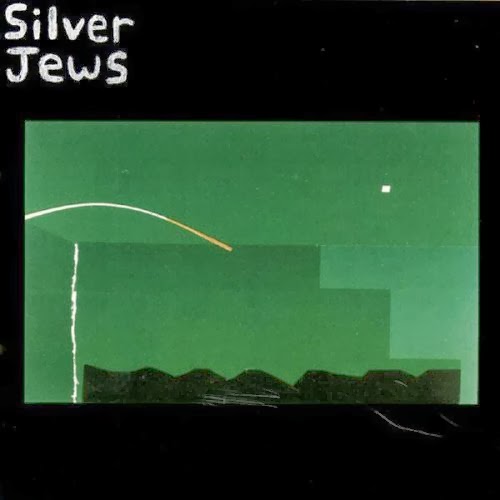
A wise Monk (Thelonious) once said, "it's always night or else we wouldn't need light". I wonder if that's what's going on in the painting on the album's sleeve.
playing After Hours at the restaurant the other day Tabi said of it that it sounded like a nursery ryhme, which of course it does. I counselled her to listen to the lyrics and then started talking about I'm Sticking With You
There's a reason this song has endured. I think it's because it nails something that doesn't really get nailed too often and although the twee indie that populated the indie charts in the 2000s aped it aesthetically they couldn't replicate its heart as it were. There's the paradoxical beauty of Moe's singing voice which wonderfully mirrors the paradoxical beauties in the songs. It's a good adjective to use about love, sticky. It's not something one can wipe off easily and it is slightly socially unacceptable because it takes you out of society a bit. There's a vulnerability to it as well as a kind of valour. Have you ever noticed how all children are invariably somewhat sticky? What is really at the songs core is the savage tenderness of love. One of the motifs Lou uses in the lyrics is highway robbery and one can't help but think of Dick Turpin and Black Bess and the sacrifice involved. I'll do anything for you, anything you want me, I'll do anything for you, ,oh oh,I'm sticking wid you. One can't help but think of Bess ridden to death just outside of York. It is like a nursery rhyme but a Grimm one. There's a line Saw you hanging from a tree and I made believe it was me. If that's not love I don't know what is.